Documents worth saving
A home inventory, photos, receipts, model numbers, and current policy form make the valuation discussion much more concrete.
Run the same loss through both methods
Use a few real belongings—such as a laptop, sofa, television, and bicycle—to understand how age and depreciation could change a claim payment.
- Record purchase date and original price.
- Estimate current replacement price.
- Read the deductible and special limits alongside the valuation method.
How the payout methods differ
Actual cash value generally reflects depreciation, while replacement-cost coverage is designed around the cost of replacing covered property with new property of similar kind and quality, subject to the policy terms.
- Check when depreciation is withheld or recovered.
- Ask whether replacement-cost coverage is standard or optional.
- Confirm whether deadlines apply to replacing items after a loss.
ACV versus replacement-cost guide
Direct answer for this situation
Actual cash value generally reflects depreciation, while replacement-cost coverage is designed around the cost of a comparable replacement subject to policy terms. Do not assume replacement-cost value is always paid up front; ask how initial payment, depreciation, replacement proof, limits, and deadlines interact.
Questions that change the answer
- How is depreciation calculated for each property category?
- Is recoverable depreciation paid only after replacement?
- What replacement deadline and documentation rules apply?
- Does the coverage limit cap payment before or after the deductible calculation?
Use a record, not memory: save the policy form or written answer that resolves each question.
Worked example
Illustration only: a comparable replacement costs $1,200, estimated depreciation is $450, and the property deductible is $500. An ACV-style starting calculation could be $250; a replacement-cost ceiling could be $700. The actual claim may differ because policy language, limits, depreciation methods, and settlement procedures control.
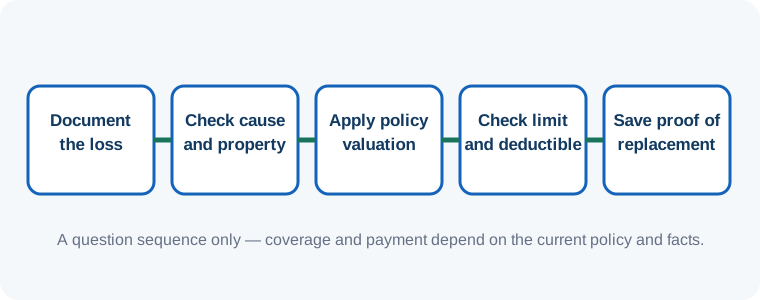
Evidence checklist for Replacement Cost vs Actual Cash Value for Renters
- Original item and condition
- Current comparable replacement
- Depreciation explanation
- Initial claim payment
- Replacement invoice and submission deadline
Sources used for this guide
These sources support the general education above. The issued policy, endorsements, insurer claim communications, and facts of a loss control an individual coverage decision.
- NAIC renters insurance consumer insight — plain-language ACV and replacement-cost explanation
- NAIC post-disaster claims guide — claim valuation examples
Related Reading
Reference Sources
Use public insurance resources and your policy documents to confirm definitions, consumer contacts, and coverage limits before buying or filing a claim.